- United Nigeria Airlines headlines 2026 Ndigboamaka traders cup
- How market dynamics made flying accessible again
- Minister: Competition, increased seat capacity driving down airfares
- Ground handlers freeze XEJet operations over N300m unpaid debt, warn other carriers
- Airline operators threaten shutdown as unions defend ₦15bn picketing action



How market dynamics made flying accessible again

The aviation industry is proving once again that market forces are the ultimate equaliser. While high operational costs, macroeconomic pressures, and currency shifts remain real challenges, the injection of vigorous competition has broken the cycle of unchecked fare hikes, writes WOLE SHADARE
For years, traversing the Nigerian airspace felt like an expensive luxury reserved strictly for corporate executives, government officials, and the affluent.

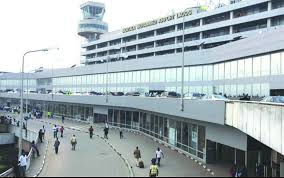
A single one-way domestic ticket on high-density routes like Lagos–Abuja or Port Harcourt–Abuja often commanded eye-watering figures, as legacy operators cited soaring foreign exchange rates, skyrocketing Jet A1 aviation fuel prices, and punitive airport charges to justify steep tariffs.
Yet across key hubs in West Africa and Nigeria’s domestic aviation landscape, a distinct economic reset is quietly underway.
Where passengers once faced rigid fare structures and artificial price floors, a potent cocktail of fierce market competition, expanding carrier capacity, dynamic pricing models, and direct regulatory interventions is beginning to break the stronghold of high prices.
Fares are not merely stabilising; across several competitive corridors, yield pressures and aggressive route battles are actively driving airfares down.
The central force behind this disruption is simple economics: the unrelenting law of supply and demand, supercharged by new market entrants and structural shifts in how airlines operate.
Breaking of monopolistic corridors
In airline economics, monopolistic and oligopolistic routes are notorious for inflated yields. When one or two legacy carriers dominate a sector, they exercise immense pricing power, effectively dictating baseline fares to a captive passenger base.
However, the recent expansion of ambitious domestic players and state-backed carriers has fundamentally altered this market structure.
Modern operators equipped with lean cost models, such as Ibom Air, along with burgeoning entrants across secondary routes, have introduced direct competition to historically high-yield sectors.
When new capacity enters a market, Available Seat Kilometres (ASK) instantly rise. To capture market share from entrenched competitors, incoming carriers rarely match existing baseline rates.
Instead, they launch with aggressive promotional pricing. Legacy carriers, suddenly facing lower load factors on previously guaranteed routes, must respond.
The result is a classic price war where yields normalise, and baseline tickets drop significantly. Passengers on major trunk lines are no longer price-takers; they are active choice-makers comparing options across multiple departure boards every hour.
State-backed airlines and race for capacity
A unique catalyst driving competition in West Africa’s domestic market is the rise of sub-national and state-backed airline ventures. Spearheaded by the benchmark commercial success of Akwa Ibom State’s Ibom Air, several regional governments have entered the commercial aviation arena—either through direct carrier launch or strategic equity partnerships.
Unlike legacy airlines burdened by historical debt portfolios and high financing costs, state-supported carriers often have better access to capital and longer-term fleet-leasing terms.
This financial runway allows them to operate modern, fuel-efficient regional jets (such as Bombardier CRJ-900s and Airbus A220s) that offer significantly lower trip costs per seat than older, fuel-thirsty narrow-body aircraft.
With lower burn rates and structured operational discipline, these modern fleets disrupt the market by offering reliable, on-time schedules at price points that older operators struggle to match without sacrificing margins.
This influx of modern tonnage has injected much-needed capacity into regional routes, directly tempering fare inflation.
International route wars
Market forces on airfares extend far beyond domestic borders. Nowhere is the power of competition more vividly demonstrated than on international long-haul corridors connecting West Africa to global hubs.
For years, foreign mega-carriers extracted premium yields on lucrative routes out of West Africa. Because local competition was limited, international economy tickets routinely reached record highs.
However, the entry of indigenous flag carriers, most notably Nigeria’s Air Peace, on the highly contested Lagos–London Gatwick route triggered a seismic pricing shift.
By pricing its launch tickets well below the prevailing market average, the local carrier disrupted the long-haul pricing structure.
In response, established European and Middle Eastern airlines, which had maintained exorbitant tariffs for decades, were forced to adjust their dynamic pricing algorithms downward, offering promotional fares and lower inventory buckets to defend their load factors.
This “Air Peace Effect” provided definitive proof that government appeals and regulatory pleading rarely lower airfares; raw, head-to-head market competition is what ultimately forces airlines to lower prices.
In a low-competition environment, revenue algorithms keep the cheapest fare buckets (such as O, Q, or N class) extremely small, rapidly escalating ticket prices to premium buckets (Y or B class) days before departure. However, as competition intensifies across a route, the risk of losing price-sensitive travellers increases.
To prevent seats from flying empty (as an unsold airline seat is a perishable asset with zero residual value), airlines are forced to keep lower fare buckets open longer to lock in baseline cash flow, introduce mid-week promotional fares to stimulate discretionary travel during off-peak windows, and adopt low-cost carrier (LCC) models where passengers pay only for seat selection or extra baggage, keeping the base fare artificially low.
Regulatory vigilance, consumer protection
While market forces drive fare reduction, regulatory oversight plays a crucial stabilising role. Industry watchdogs, including the Nigeria Civil Aviation Authority (NCAA) and the Federal Competition and Consumer Protection Commission (FCCPC), have increasingly scrutinised tariff structures to curb anti-competitive behaviour, unfair price-fixing, and arbitrary surge charges during peak travel periods.
By enforcing transparency in ticket pricing, mandating clear refund policies for delayed or cancelled flights, and preventing tacit collusion among domestic operators, regulators ensure that market forces operate fairly.
Transparency forces carriers to compete on operational efficiency and service quality rather than artificially inflated fares.
Making lower fares sustainable
While current competition has provided welcome relief for travellers, the long-term sustainability of lower airfares depends heavily on structural economic reforms. Airlines operate on razor-thin margins, and continuous fare wars can turn destructive if underlying operational costs remain unaddressed.
An airline operator who spoke to Aviation Metric on condition of anonymity said that for low fares to become a permanent feature of the market rather than a temporary price war, key operational bottlenecks must be resolved, adding that establishing local refining capacity would reduce reliance on imported aviation fuel and eliminate foreign exchange volatility.
“Developing local MRO facilities to drastically cut aircraft maintenance costs, which are currently settled in foreign currency overseas. Fully implementing open skies policies across Africa to expand route networks, boost passenger volume, and lower operating costs per seat kilometre are some of the solutions”.
Last line

From domestic trunk routes to international long-haul sectors, airlines are discovering that profitability no longer comes from charging exorbitant prices to a small elite—it comes from operational efficiency, high load factors, and competitive pricing that brings flying back within reach of the everyday traveller.
As open skies, fleet modernisation, and aggressive competition continue to shape the industry, the clear winner is the flying public.
Google+